GRIBAUDO EZIO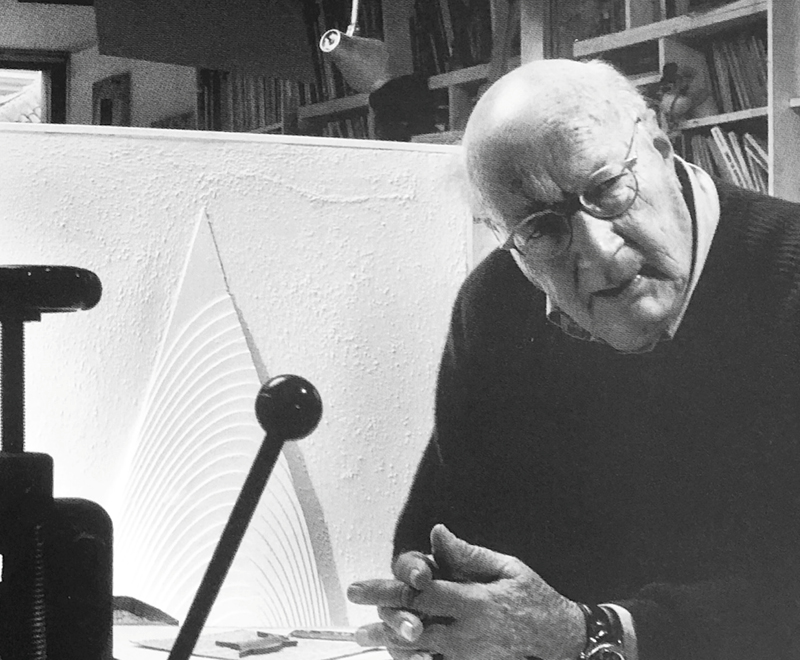
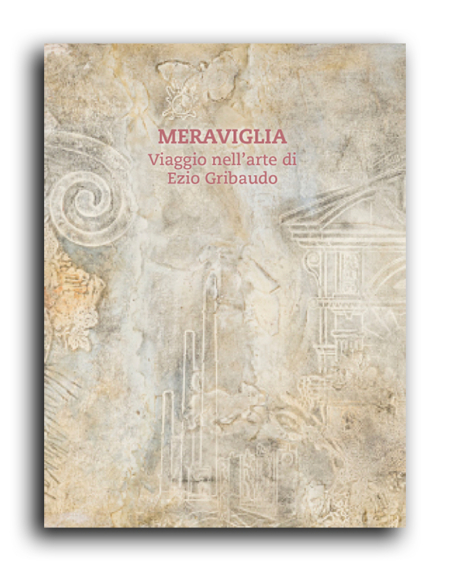
Ezio Gribaudo (Turin, 1929–2022) was an artist and art publisher who was trained in graphic arts at the Albertina Academy of Turin, Brera Academy of Milan and later at the Faculty of Architecture of Turin Polytechnic. In his own works involving the use of a variety of media and techniques, as well as the more traditional painting instruments, he has gone from graphic art to sculpture to painting, using the tools of the modern printing industry, later replaced by manual presses echoing the more artisanal side of his work. After his early work characterized by a figurative style, Gribaudo expanded his pictorial interests to include multiple materials and techniques, thus paving the way for his “Flani” and “Logogrifi”. The white monachromes developed at the printer’s were made from dies, and serial reproduction based on flongs, i.e. what is left over from the production of newspapers and other publishing material, thus going beyond traditional painting techniques. In the 1960s, he developed his “Logogrifi”, that is to say the use of the embossing technique on blotting paper, proof of just how important the relationship between the text and the image is in his work. Gribaudo was awarded the Graphic Arts Prize at the 33rd Venice Biennale (1966) for his “Logogrifi”, whose concept is based on the word game of a “logos” (speech) expressing a verbal and image-related puzzle, and “grifos” ( “fishing net” or enigma).
The artist’s “Logogrifi” then in turn gave rise to multiple material and verbal developments. Paper, typographic flans, collages manipulated and fused with color, cages, globes, and travel diaries are the means for representing images reinterpreted through traces and memory.
- Display 100 Products per page
-
Ezio Gribaudo (Turin, 1929–2022) was an artist and art publisher who was trained in graphic arts at the Albertina Academy of Turin, Brera Academy of Milan and later at the Faculty of Architecture of Turin Polytechnic. In his own works involving the use of a variety of media and techniques, as well as the more traditional painting instruments, he has gone from graphic art to sculpture to painting, using the tools of the modern printing industry, later replaced by manual presses echoing the more artisanal side of his work. After his early work characterized by a figurative style, Gribaudo expanded his pictorial interests to include multiple materials and techniques, thus paving the way for his “Flani” and “Logogrifi”. The white monachromes developed at the printer’s were made from dies, and serial reproduction based on flongs, i.e. what is left over from the production of newspapers and other publishing material, thus going beyond traditional painting techniques. In the 1960s, he developed his “Logogrifi”, that is to say the use of the embossing technique on blotting paper, proof of just how important the relationship between the text and the image is in his work. Gribaudo was awarded the Graphic Arts Prize at the 33rd Venice Biennale (1966) for his “Logogrifi”, whose concept is based on the word game of a “logos” (speech) expressing a verbal and image-related puzzle, and “grifos” ( “fishing net” or enigma).
The artist’s “Logogrifi” then in turn gave rise to multiple material and verbal developments. Paper, typographic flans, collages manipulated and fused with color, cages, globes, and travel diaries are the means for representing images reinterpreted through traces and memory.
- Display 100 Products per page